.svg)


ABM doesn’t fail because it’s a bad idea
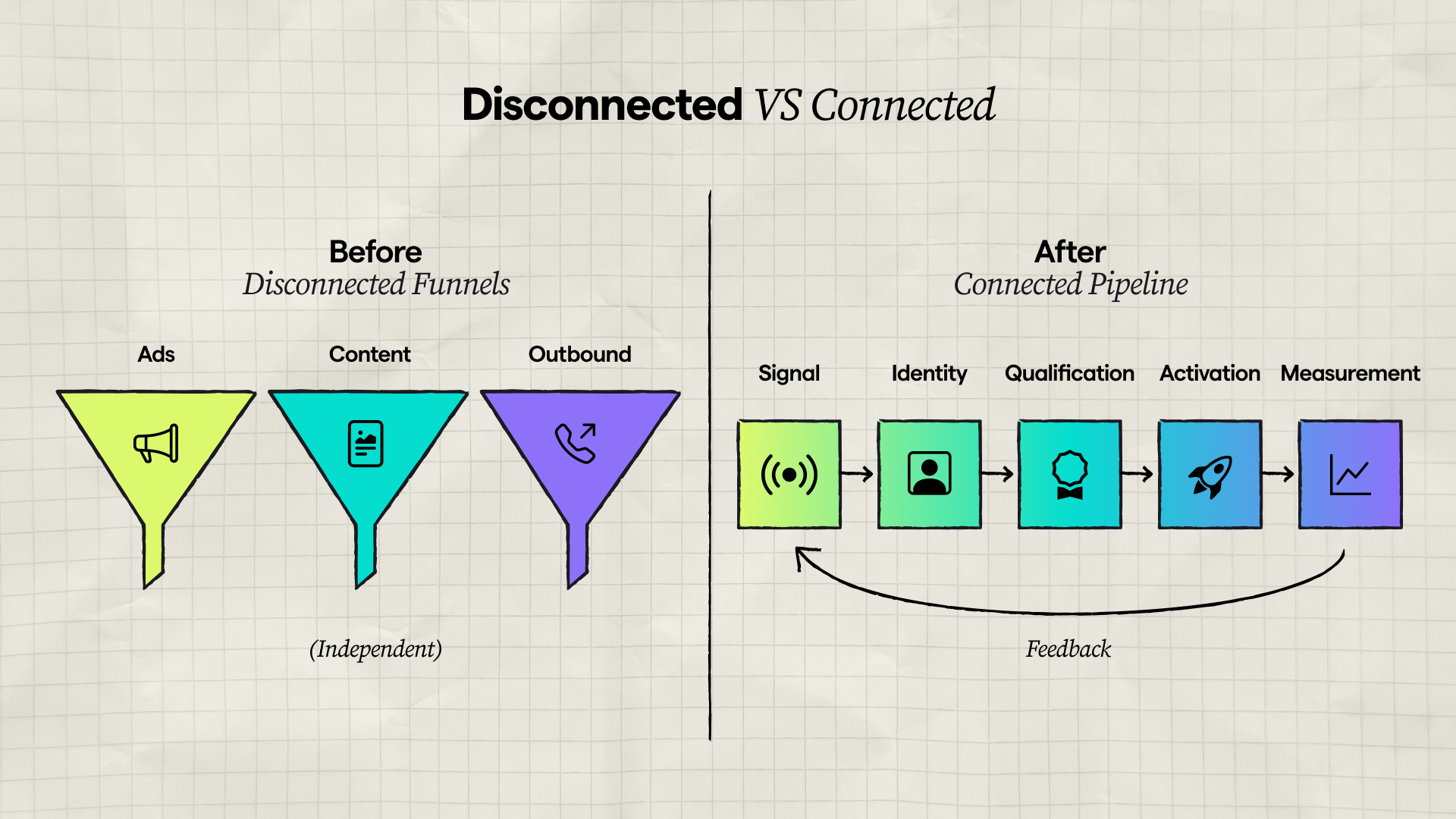
It fails because it’s fragmented.
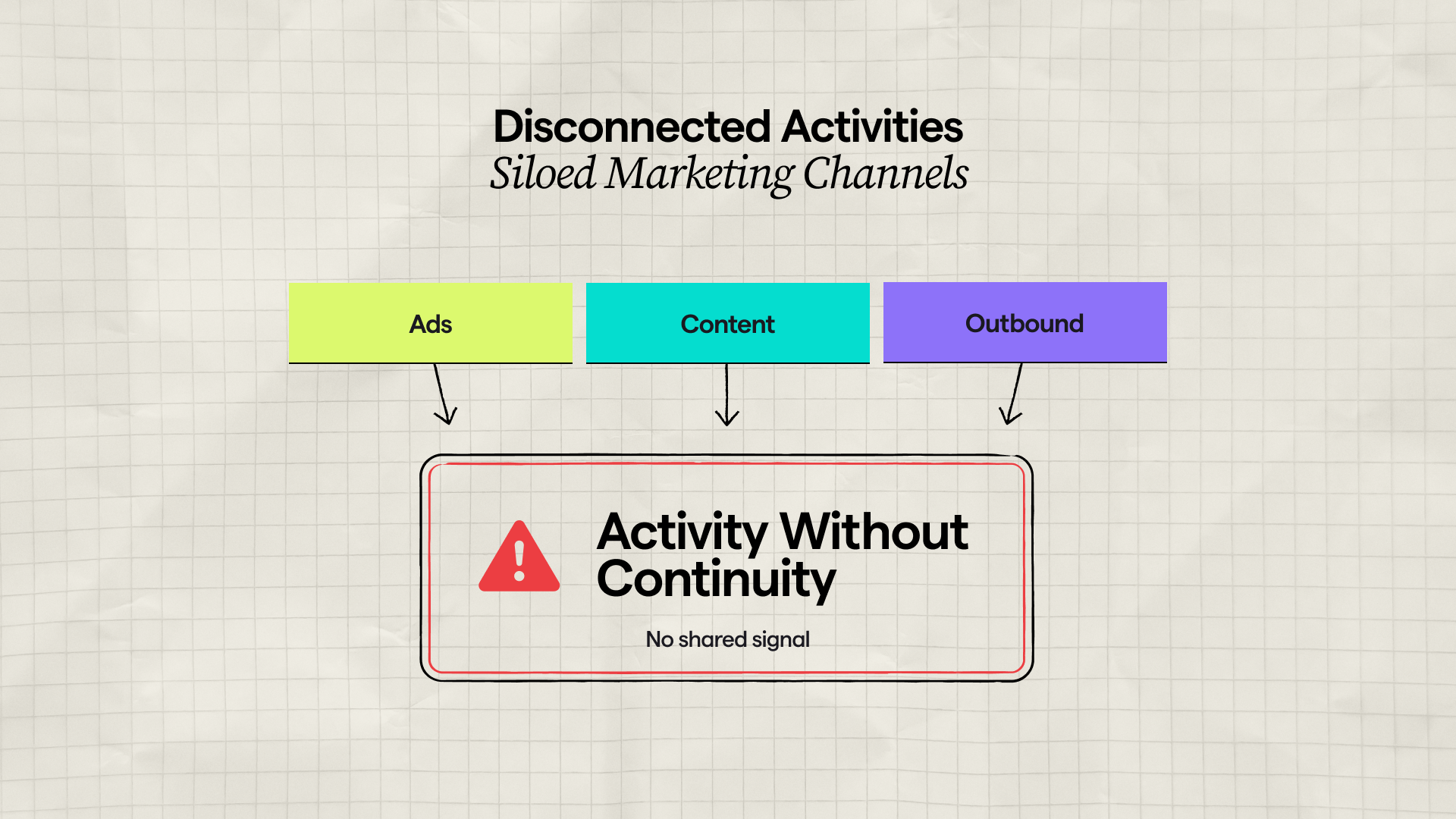
Most teams think they’re “doing ABM” because:
- ads are running
- content is publishing
- outbound is firing
But none of it is connected.
Disconnected motion kills momentum.
You don’t have an ABM system.
You have three teams running three plays at three different tempos.
Step 1 — Intent signals are first-class data
Forget CV-based scraping.
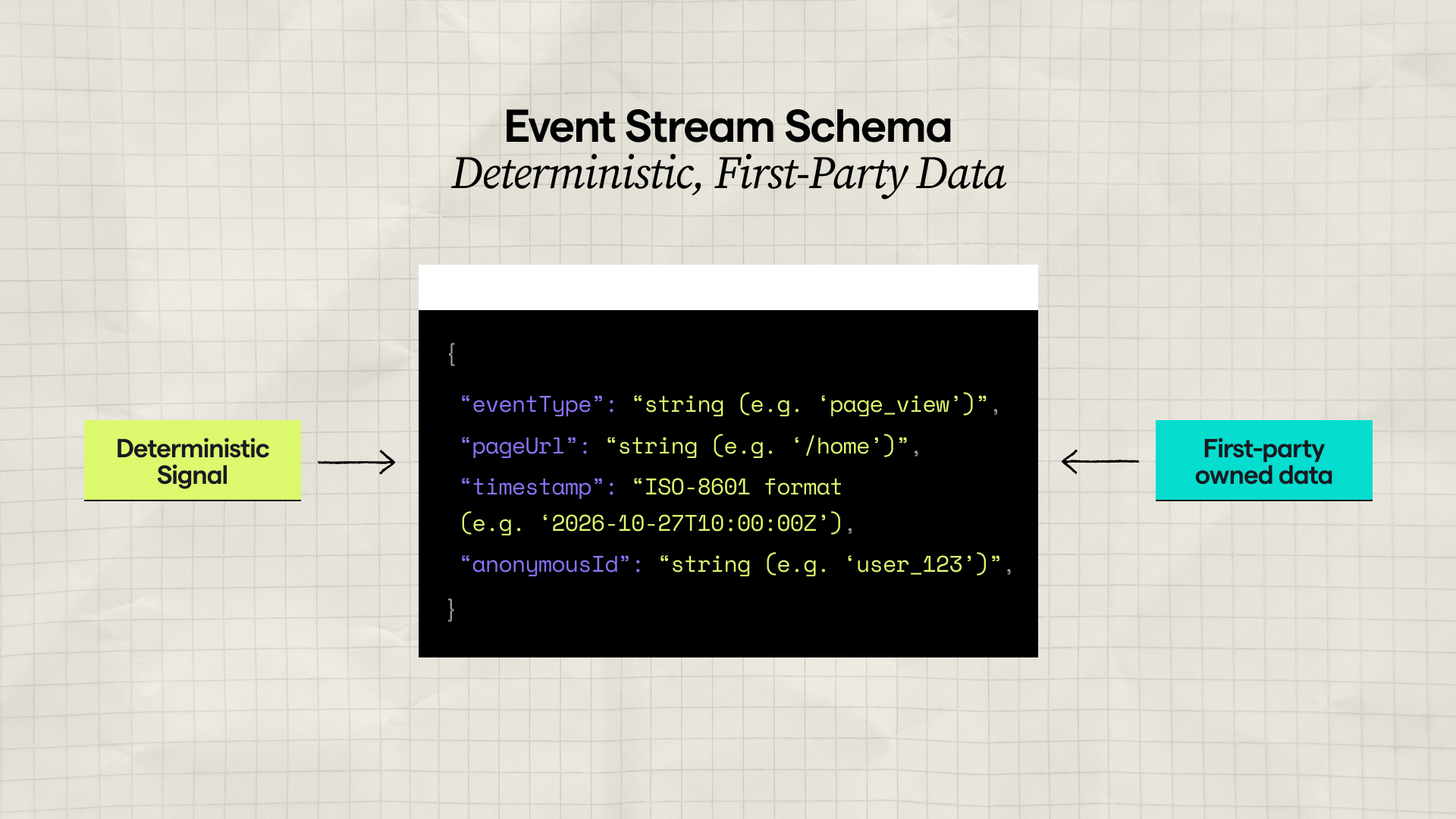
We start with first-party events:
Examples:
- pricing page view
- case study consumption
- demo scheduler opens
- repeat sessions within 7 days
This data is:
- structured
- timestamped
- machine readable
This is the trigger layer.
Step 2 — Resolve identity at the account level
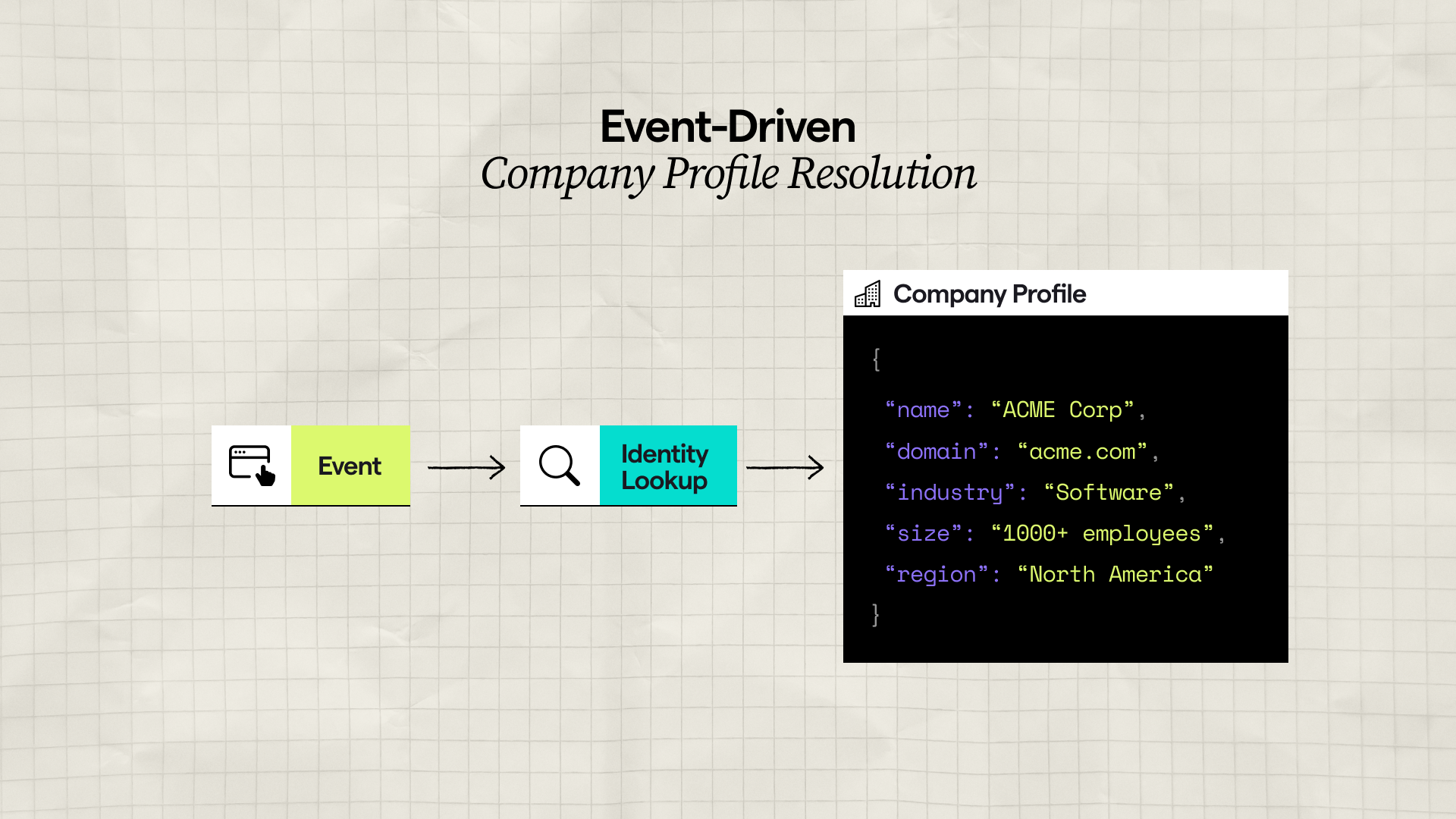
Once a high-intent event fires, the system resolves which company it belongs to.
This is done using:
Outputs:
- company domain
- name
- size
- industry
- location
Why this matters:
- Company identity is what sales cares about
- Individual identities at this stage are noisy
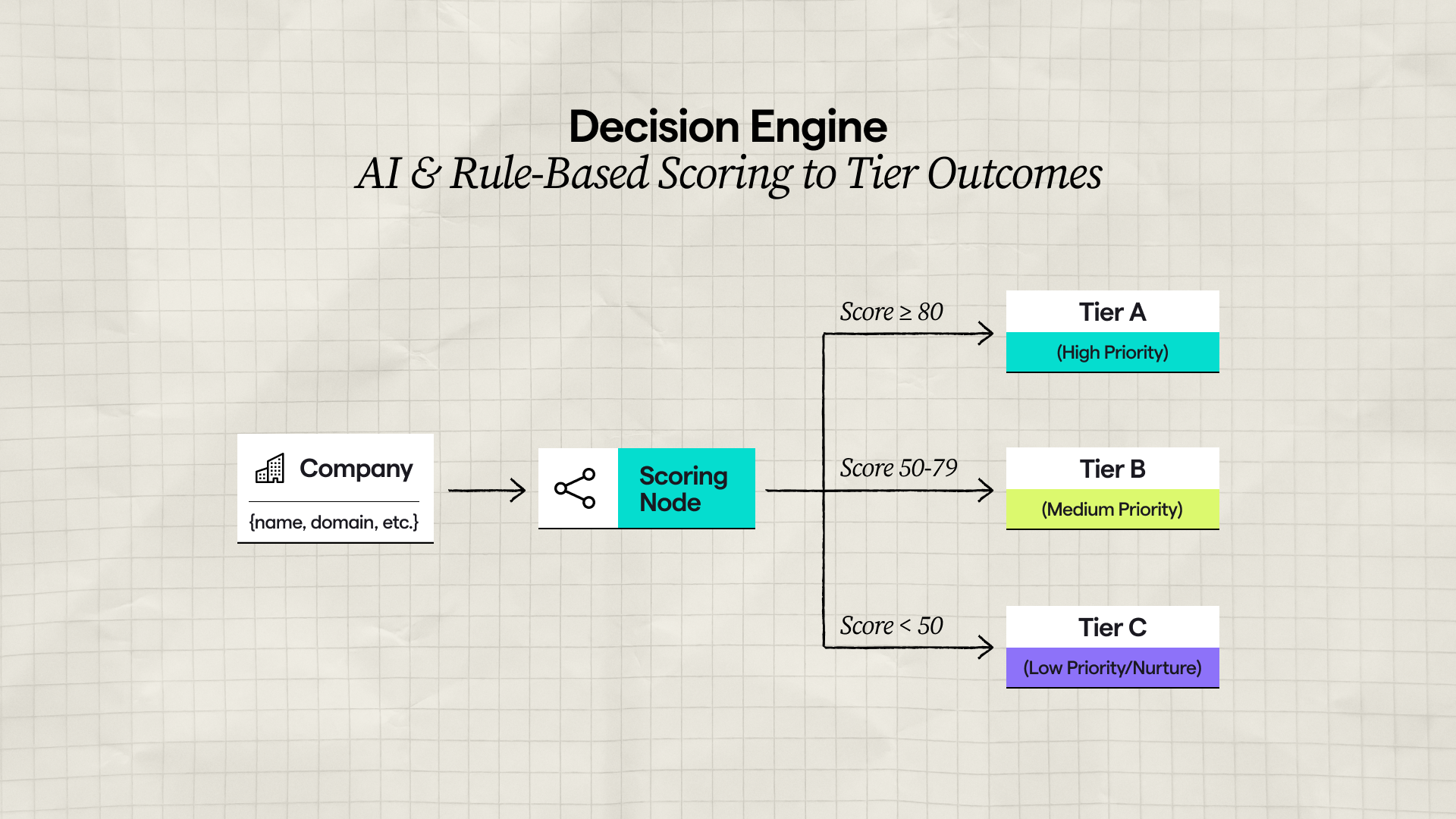
Step 3 — Score against an explicit ICP
This is the real system pivot.
Instead of enriching everything,
we only score first, then enrich.
The qualification layer applies:
- rules (industry, size, fit criteria)
- engagement recency
- composite scoring (0–100)
- reason codes
This can be implemented with:
- rule engine
- custom code (node, python, serverless)
- or AI scoring (Claude Code)
This layer outputs:
- tier (A / B / C)
- score
- reason
Step 4 — Conditional enrichment
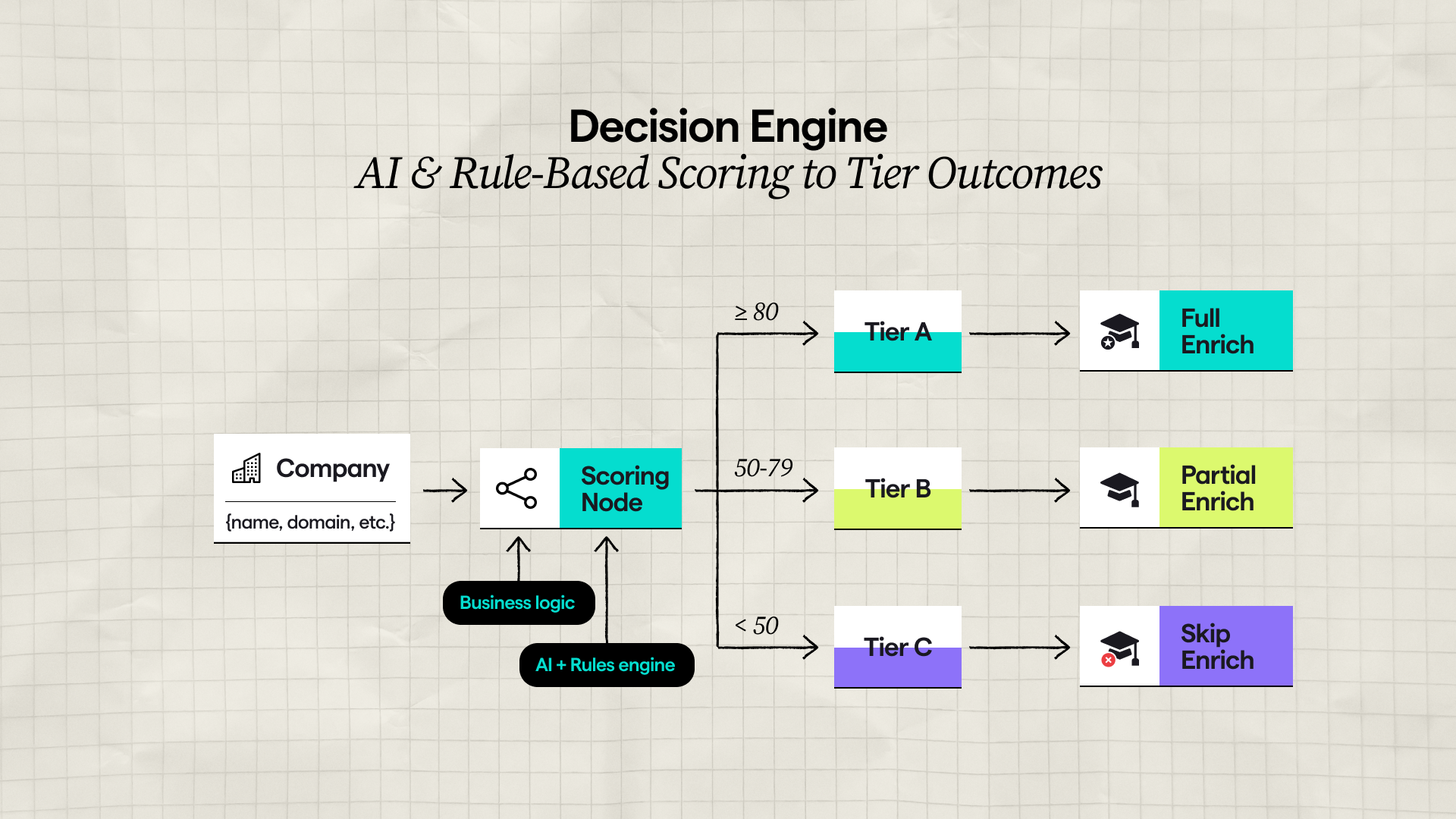
Now that you know which companies matter,
pull just the data you need.
For Tier A:
- contact discovery (roles)
- email verification
- technographics
For Tier B:
- partial enrichment
- wait for next signal
For Tier C:
- drop
- cheap retargeting
This keeps:
- cost low
- API calls minimal
- noise out of the system
Step 5 — Activation into outreach systems
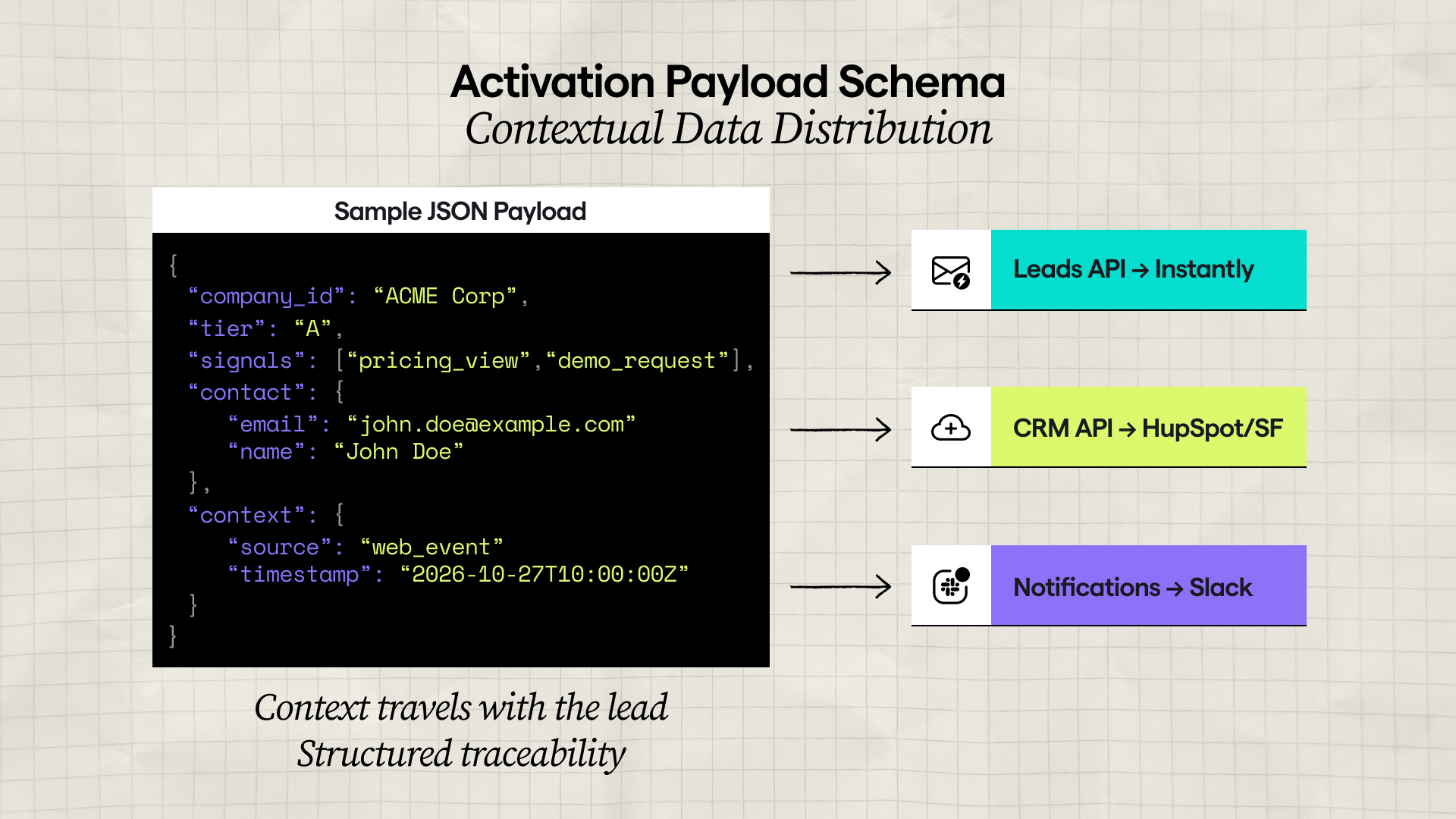
Now the activation layer takes over.
We push structured payloads such as:
{
  company: { domain, name },
  intent: “Demo page view”,
  score: 87,
  recommendedAngle: “Friction in demo ops”
}
to systems like:
- Instantly (API)
- HubSpot (custom API)
- Slack alerts for ops
- CRM for sales
This is not blasting.
This is engine-driven outreach.
Step 6 — System-wide measurement & feedback
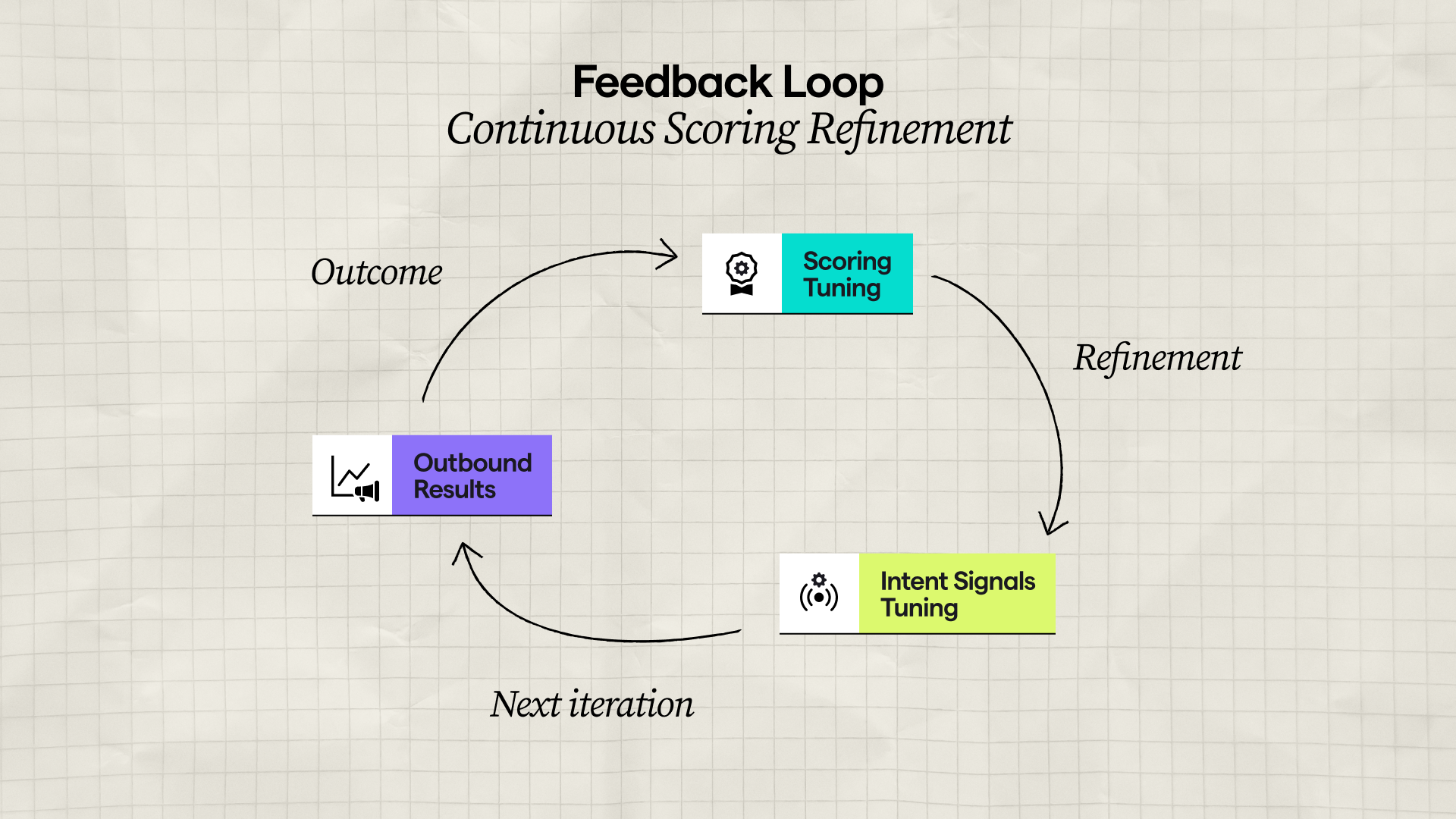
Every outcome feeds the loop:
- opens
- replies
- meetings booked
- pipeline movement
This feeds back into:
- event rules
- scoring refinement
- messaging optimization
This turns ABM into a truly adaptive engine, not a set of disconnected plays.
Why this converts — in real engineering terms
Because this system:
- uses first-party signals
- avoids spammy lists
- aligns sales with real intent
- preserves context across platforms
- measures impact holistically
It’s ABM as feedback-oriented infrastructure, not tactics.
The real takeaway
ABM is not a campaign.
It’s a signal-driven decision system.
Once you build the system around real intent flow,
everything else is execution detail.